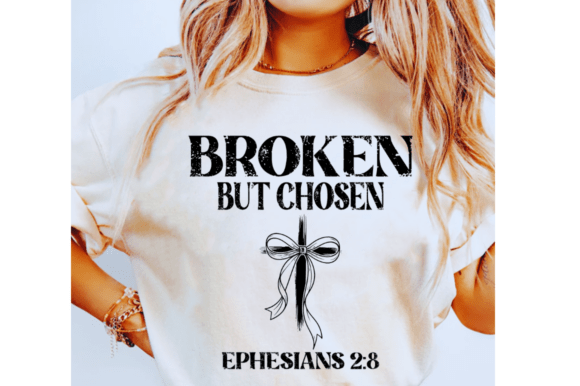
Broken but Chosen Christian SVG
A Quiet Strength That Stitches Well
When I first opened Broken but Chosen Christian SVG, I didn’t see a trendy phrase or a rushed digital asset—I saw something that held space. The composition balances raw honesty and gentle reverence: soft broken lines framing clean, centered lettering, with subtle symbolic flourishes—no heavy crosses, no ornate borders, just quiet intention. It’s not shouting. It’s breathing. That matters deeply when you’re stitching for real people—new moms choosing nursery decor, small shop owners curating meaningful tote bags, or Etsy sellers building trust through authenticity.
How It Lands on Real Embroidered Products
I tested Broken but Chosen Christian SVG across three actual projects: a medium-weight cotton canvas tote bag (for a local boutique), a French terry sweatshirt (custom order for a youth group leader), and a 100% cotton baby onesie (a gift for a friend after a NICU stay). In each case, the design performed with calm reliability—not flashy, but unmistakably *present*.
- Tote bag: Stitched at 3.8" wide with a light cutaway stabilizer, the broken-line motif translated beautifully into satin stitch edges—soft but defined. Customers paused to trace the shape with their fingers. It felt tactile, not graphic.
- Sweatshirt: On textured French terry, I reduced density slightly in the fill areas and extended the underlay. The phrase remained legible without looking stiff or overworked—a win for custom apparel where comfort and clarity both matter.
- Baby onesie: At 2.5", the design retained emotional weight without overwhelming the garment. No tiny details vanished in the stitching; no letters bled or blurred. Parents commented on how “gentle” it looked—not preachy, not fragile, just tender.
Where It Fits—and Where It Asks for Thoughtful Handling
Broken but Chosen Christian SVG shines brightest on stable, medium-to-heavy fabrics: canvas, denim, twill, brushed cotton, and midweight knits. It’s a natural for embroidered patches, pillow covers, kitchen towels, and boutique-branded aprons—items where message and material coexist intentionally.
But it’s not universally forgiving. Here’s where I’d pause before stitching:
- Stretchy fabric (like jersey or rib knit): Requires excellent stabilization and possibly slight digitizing tweaks—especially around the broken-line elements, which can distort if the base fabric shifts.
- Dark or heavily textured backgrounds: Test thread contrast carefully. A matte charcoal thread on black duck canvas reads beautifully; glossy white on dark terry can look washed out unless stitch density is adjusted.
- Curved surfaces (caps, curved pillow fronts): The central phrase holds up well, but the outer broken-line motif may need repositioning or simplification depending on hoop access.
- Small hoop sizes (< 4" diameter): Works cleanly down to ~3", but avoid shrinking further—the delicate breaks between letterforms start to merge, softening the meaning instead of reinforcing it.
What It Adds to Your Finished Product—Beyond the Thread
This isn’t just a machine embroidery design—it’s a quiet value multiplier. On a handmade product, Broken but Chosen Christian SVG elevates perceived care. Buyers don’t just see lettering; they sense intention behind every break and curve. That translates directly to customer trust, especially for faith-based or emotionally resonant items like baptism gifts, grief support tokens, or wedding weekend totes.
For craft business owners and Etsy sellers, it supports brand consistency without demanding uniformity—pair it with neutral palettes or earthy thread tones, and it feels cohesive across baby embroidery, holiday embroidery, and small shop merchandise. And because it avoids cliché visuals, it photographs well in printable mockups and stands out in crowded digital listings—not as “another Christian quote,” but as a distinct design asset with visual rhythm and emotional resonance.
Practical Notes Every Embroidery Designer Should Check
Before stitching Broken but Chosen Christian SVG into your next project—or listing it in your shop—here’s what I do every time:
- Test on scrap fabric first, using the exact stabilizer and thread you’ll use in production.
- Review stitch density—especially in the broken-line sections. Too dense, and the texture flattens; too sparse, and the breaks lose definition.
- Confirm hoop size compatibility with your most common projects. If you specialize in caps or baby items, double-check whether the file includes alternate versions or suggestions for scaling.
- Inspect small details in your embroidery software: are corners sharp enough? Do any fine joins risk fraying after washing?
- Try black-and-white mockups—this design relies on shape and spacing more than color, so grayscale previews reveal clarity issues faster than full-color renders.
- Compare light and dark fabric backgrounds side-by-side. What reads as serene on oatmeal linen may feel muted on navy chambray.
- Use proper stabilizer—light cutaway for stable wovens, tear-away with light spray adhesive for knits, and always test wash one sample.
- Verify licensing terms before selling finished items or bundling the embroidery file as part of a digital product. If commercial use isn’t explicitly permitted, reach out to the creator—most reputable designers respond quickly.
Final Thought: Design With Purpose, Not Just Placement
Broken but Chosen Christian SVG doesn’t beg for attention—it invites reflection. That makes it unusually versatile within the T-Shirt Designs category, yet equally at home on heirloom tea towels, embroidered patches for mission teams, or personalized gifts meant to be held, not just worn. It works because it respects the person wearing it, the maker stitching it, and the moment it’s meant to honor. In a landscape full of loud, fast, and forgettable, this one lingers—not in volume, but in quiet, careful craft.